
Arrest Warrants in Travis County
A Travis County arrest warrant gives an officer the power to take someone into custody. Texas law sets the groundwork first. The complaint must identify the accused when known, name the offense, and lay out facts showing probable cause. A magistrate or judge then reviews the request; no officer signs off alone. Once issued, the warrant lands in the court system by charge level. Felonies run through a criminal District Court and the District Clerk, while Class A and B misdemeanors go to a County Court at Law and the County Clerk. Keep in mind the issuer and the agency serving the warrant can be different offices.
Travis County Arrest Warrant Probable Cause
How does a Travis County arrest warrant actually get made? APD policy sketches the local route. An officer drafts a complaint, an affidavit, and a proposed warrant. Travis felony papers get a supervisor review before they reach a magistrate. After the magistrate signs, the papers go to the proper clerk, which assigns a cause number. Probable cause itself means the facts back a reasonable belief that an offense occurred and that the named person took part. One more distinction matters. The sworn affidavit is not the same document as the signed warrant, though both may sit in the same case file.
What a Travis County Arrest Warrant Contains
A public arrest-warrant record may tie together several details: a cause number, the offense, the court, the magistrate, an issue date, bond condition, service agency, and current status. Odyssey's own guide notes that deeper information can require opening the associated case, since a bare warrant-number result may show less. Formats differ, and some material may be sealed or redacted. For felony cases, the District Clerk can confirm the cause-number pattern, which commonly begins with D-1-DC.
| Identifier | D-1-DC prefix is a pattern clue, not a complete sample number. |
|---|---|
| Charge | Offense and classification, if public. |
| Issuer | Magistrate or court with authority over the case. |
| Bond | Cash, surety, PR, or no-bond status if set and disclosed. |
| Service | Assigned agency and return event when visible. |
| Status | Active, recalled, quashed, served, or another court label. |
Travis County Arrest Warrant Court Roles
Several courts split the work in Travis County. The criminal District Courts handle felony proceedings, and the seven County Courts at Law hear Class A and B misdemeanors. Magistrates review probable cause, run magistration, and handle bail within their authority. A municipal judge may also act as a magistrate under Texas law. Behind the courts sit two clerks. The District Clerk keeps felony criminal case records. The County Clerk's Misdemeanor Records Division supports the County Courts at Law. For a probable-cause affidavit, the District Clerk is the first stop, with a TCSO Public Information Act request as another route.
How Travis County Arrest Warrants Are Served
Serving a warrant in Travis County depends on the assignment. TCSO deputies, Austin Police, municipal officers, constables, and other authorized agencies can all execute warrants. Constables process JP traffic and hot-check warrants, while APD Court Services handles Austin municipal Class C and traffic service. Central Warrants can route a county-held question. After an arrest in Travis County, the Sheriff says the person goes to Central Booking, where the process covers screening, fingerprints and photo, a booking number, a phone call, magistration, and bail advice. Bond release does not end the case. The District Clerk Criminal Division page identifies the downtown criminal-court records office.
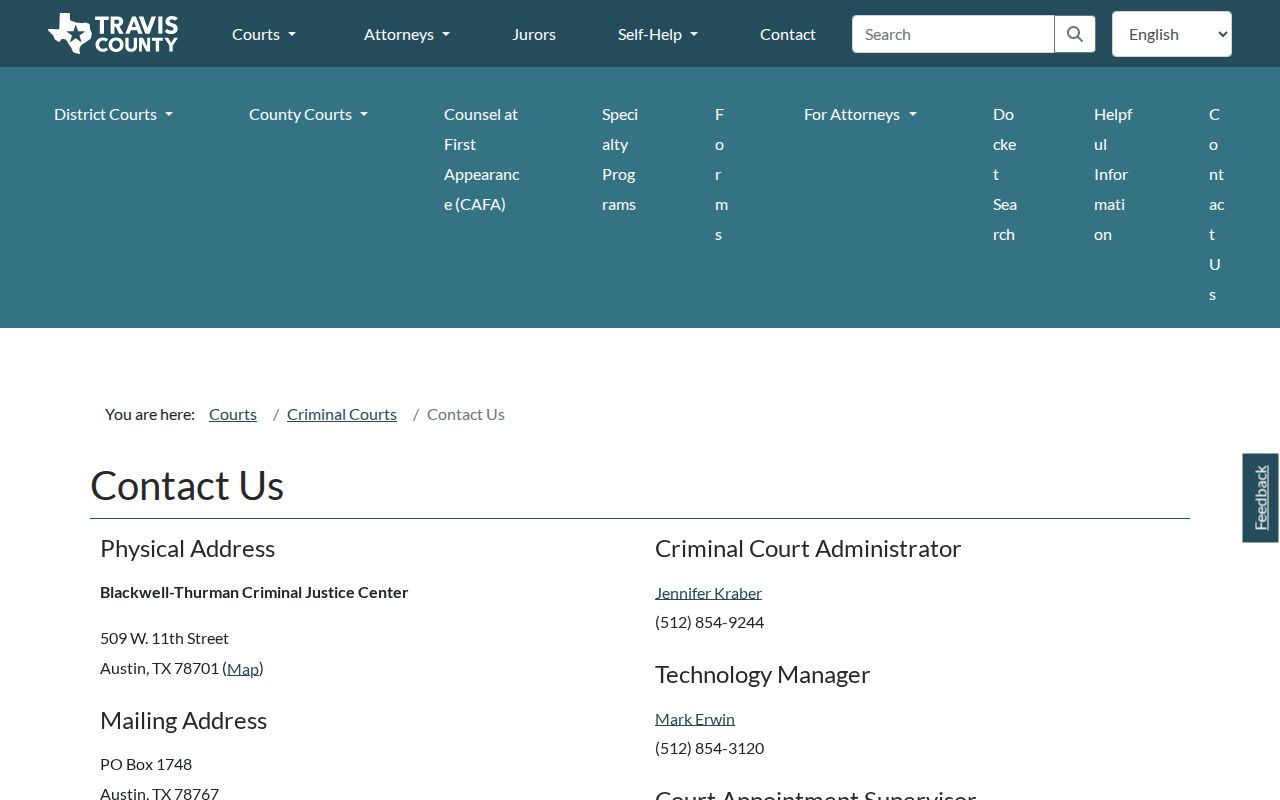
The county contact page identifies the criminal-court complex, where Travis County routes court administration and criminal records.
Travis County Arrest Warrant Booking Process
Central Booking sits inside the Travis County Jail on West Tenth Street. The official flowchart walks through an intake questionnaire, medical screening when needed, property processing, prints and photo, formal charge review, then holding or transport. The Sheriff's office handles jail information. Magistration comes next. That is where charges are read and bail applicability gets explained. Note the booking number: it marks the booking event only, never a stand-in for the cause number or court docket. The official TCSO arrest and booking page describes Central Booking and its intake flow.
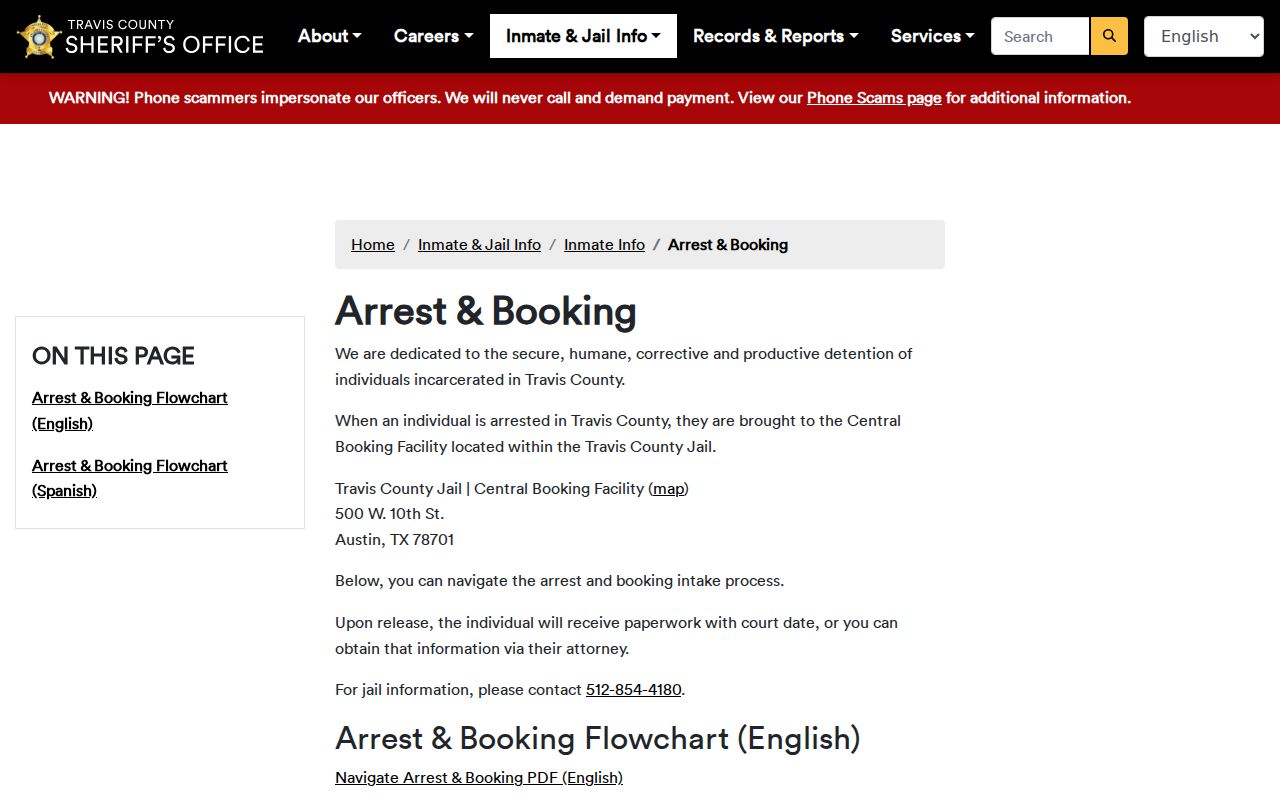
For current custody questions in Travis County, call the jail information line and follow its routing.
Arrest Warrant vs Summons vs Bench Warrant
These three tools do different jobs. An arrest warrant follows a probable-cause showing. A summons just tells a person to appear. A bench warrant follows a missed court obligation. Travis County courts and magistrates decide which process applies.
| Feature | Arrest warrant | Summons | Bench warrant |
|---|---|---|---|
| Starting point | Complaint and probable cause | Direction to appear | Failure to appear or comply |
| Purpose | Authorize arrest | Set a court appearance | Bring a person before court |
| Next step | Confirm court, counsel, bond | Attend as directed | Ask issuing court about recall or reset |
Getting a summons does not mean a warrant can never follow; missing the date can trigger later court process. See the bench-warrant process for that route in Travis County.
Sealed Travis County Arrest Warrant Records
Some warrant material stays hidden for good reason. Grand-jury indictments and related warrant documents can remain sealed until later in the case, and active-investigation records may also be withheld. So a blank search result does not prove no Travis County arrest warrant exists. Ask the District Clerk or a defense attorney about the specific case. Odyssey case results and court files are not a complete public arrest-warrant list, and restricted information may not be disclosed.
Resolve a Travis County Arrest Warrant
Call the court that issued the warrant first. Confirm the record and ask what the court requires. You may need counsel, bond, a court appearance, or a motion filed for you. TCSO Central Warrants answers at (512) 854-9751. For surrender questions on other APD warrants, APD points people to Travis County Self Surrender at (512) 854-7860, though that call does not promise a no-arrest visit. A Texas defense attorney can talk through a walk-through, bond, or a motion to recall or quash the warrant. The Travis County resolution steps spell out that route. Keep any receipt or court order, and confirm the serving agency received the update so the warrant record actually changes.
Before surrender: Ask counsel about the warrant and the court's process; a public phone line cannot promise release or a particular bond.
Travis County Arrest Warrant Surrender Route
APD keeps its municipal MC and CC routes separate from other APD warrants and from Travis County self-surrender arrangements. First confirm which suffix, court, and agency apply. A felony case, an Austin municipal citation, and a JP capias do not share one walk-in counter. In custody, Central Booking and magistration take over. Online payment is off the table at that point. Bond secures release under conditions; it does not dispose of the charge or clear every related hold.