
Bench Warrants in Travis County
A Travis County bench warrant follows a court obligation that was not met. Common triggers include missing a hearing, failing to respond to a citation, violating an order, or not completing community service. Austin Municipal Court says failure to pay or follow an approved plan can also lead to a warrant.
Unpaid judgment is a distinct path. A capias pro fine is post-judgment process for a fine or cost that remains unsatisfied. It is not the same as a new arrest warrant based on a new investigation.
Where Travis County Bench Warrants Begin
There is no single bench-warrant desk. Felony settings belong to a criminal District Court and its clerk; Class A and B misdemeanors go through a County Court at Law. A county traffic setting belongs to the JP named on the ticket. Austin and other city matters stay with their municipal courts.
The clerk can identify the court that controls the missed date. The sheriff or constable may serve the process, but a serving agency cannot reset the hearing or recall a court order.
Travis County Bench Warrant Issuance
After a required appearance or order is missed, the court may direct that a person be brought before it. The court records the process in the underlying case, and a sheriff, constable, city police officer, or marshal may be assigned to serve it. Venue determines which record system shows the entry.
A missed-date chain can look like this: citation or case setting → missed appearance → FTA or capias process → service, bond, new setting, or recall. The exact label depends on the court and stage of the case.
Austin Walk-In Mitigation Is Specific
Austin Municipal Court advertises walk-in mitigation for warrants, commitments, and pending cases with a judge. Austin Community Court separately describes a safe-haven route for a voluntary appearance on eligible Austin matters. The court's posted windows and case limits control.
This is not a county-wide promise. A JP, felony, or another city's warrant may follow a different process. Check the Austin page before traveling and ask whether the case fits the court's mitigation path.
The official Austin Community Court page sets out its safe-haven terms.
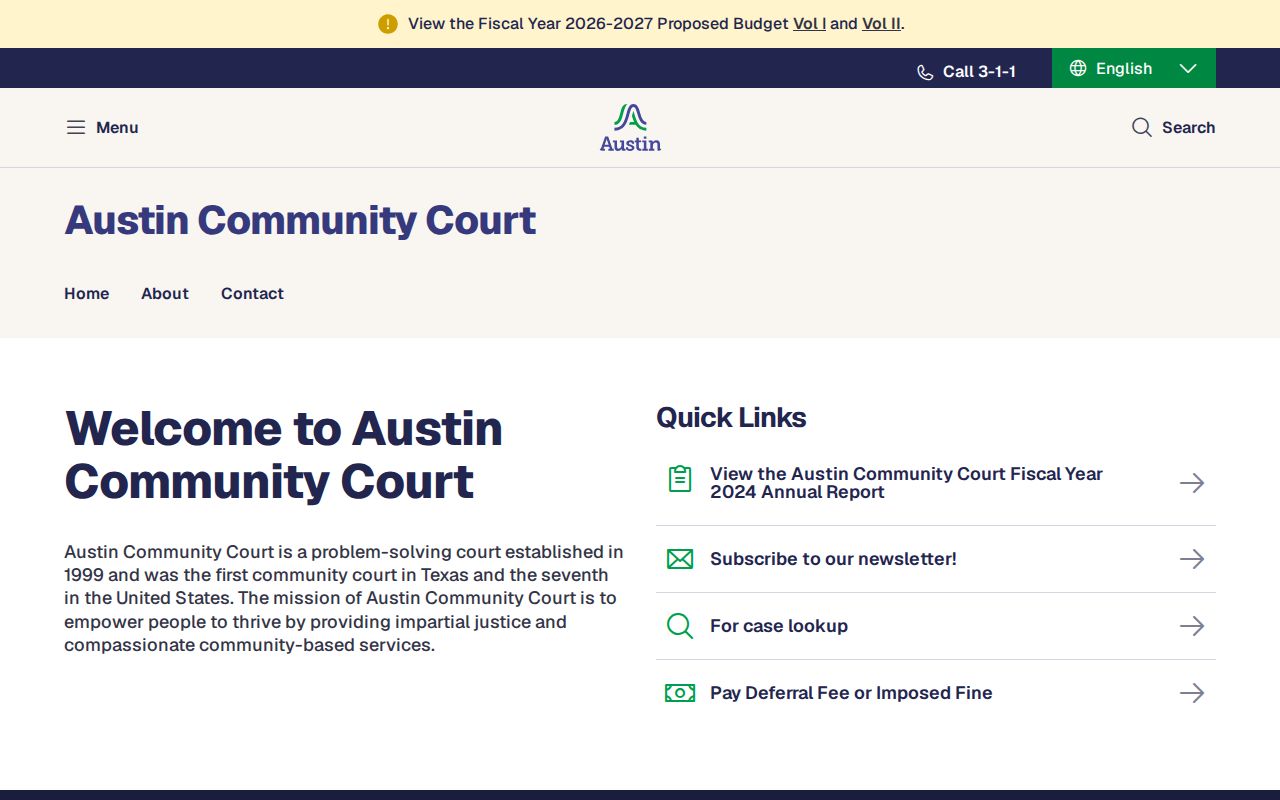
The source describes a city program, not a general no-arrest policy for every Travis County warrant.
Bench Warrant vs Arrest Warrant
The key difference is the event that starts each process. A bench warrant responds to a court obligation in an existing matter; an arrest warrant follows a complaint and probable-cause review. Both can result in custody, but the court file and next step differ. See Travis County arrest warrants for the charge-based process.
| Feature | Bench warrant | Arrest warrant |
|---|---|---|
| Trigger | Missed hearing or court order | Complaint with probable-cause facts |
| Case stage | Existing citation or case | New charge or investigation |
| Issuer | Court handling the matter | Magistrate or authorized judge |
| Resolution | Reset, recall, payment, or appearance | Counsel, surrender, bond, or court order |
Travis County Bench Warrant Capias Pro Fine
A capias pro fine is tied to an unpaid fine or costs after judgment in a covered JP or municipal case. Texas Chapter 45A requires a hardship inquiry and consideration of alternatives before issuance in covered matters. The court may consider payment, community service, or another allowed option, but eligibility is not automatic.
Ask the clerk whether the record is an FTA, capias, or capias pro fine. The answer affects whether you need a new setting, a payment plan, a hearing, or legal help.
- FTA
- Failure to appear as required by a citation or court order.
- Capias
- Process directing an officer to bring a defendant before court.
- Recall
- The issuing court withdraws the warrant; confirm service systems receive the update.
Resolve a Travis County Bench Warrant
Start with the court and ask what is required before making a payment or going to a counter. A motion to recall or quash is court-specific and may need an attorney. A voluntary appearance, bond, or reset can be appropriate in some cases, but the issuing court decides.
- Use the citation or cause number to identify the issuing court.
- Ask if the warrant is active and whether payment would count as a plea.
- Discuss bond, recall, or a new setting with the clerk or counsel.
- Keep the written order or receipt and ask when the status will update.
Plan first: A bench warrant may be served during a law-enforcement contact; confirm the court's approved appearance path before traveling.
Payment, Bond, Reset, or Motion
A JP payment page may accept a case while a different matter requires a hearing. Travis County says not all cases qualify for online payment, and the constable payment route treats payment as a no-contest plea that results in conviction. Ask before paying if you want to contest the citation.
For an Austin case, ask whether walk-in mitigation applies. For a felony or County Court at Law case, contact the assigned court or attorney. There is no county-wide bond amount or universal motion form in the researched sources.
Which Travis County Court Issued the Warrant
The underlying citation, docket, or cause number is the best clue. The District Clerk keeps felony criminal records; the County Clerk serves County Courts at Law misdemeanors; the JP clerk holds that precinct's traffic and Class C case; a municipal clerk handles a city ordinance or traffic file.
County-wide service does not make one court responsible for every case. Ask the clerk where the case was filed, whether an officer has been assigned, and which judge can recall the process.
Family and Civil Process Uses Another Route
Child-support contempt, civil body attachment, and family-court process are not the same as a criminal bench warrant. Travis County District Clerk Family Division and the issuing family or civil court are the right starting points for those records.
If the document is unclear, ask the clerk to name the case type and court before calling a sheriff list. The procedure depends on the order that created the process.